- Judith Guthrie's Nose Dogs Newsletter
- Posts
- Two Puppies, One Big Honor
Two Puppies, One Big Honor
Two of my puppies have been selected to join the prestigious Penn Vet Working Dog Center (PVWDC)

Judith Guthrie
July 09, 2025
It’s been a big and humbling milestone here at Darkmoon Farms & Kennels. Two of our puppies have been selected to join the Penn Vet Working Dog Center (PVWDC). If you know me, you know how much this means.
Meet Spring: The 200th Puppy to Join The PCWDC
First came Spring, formerly known as Barracuda from the classic cars litter, who became the first pup from my program to be accepted into PVWDC. And not just that, she was also their 200th puppy.
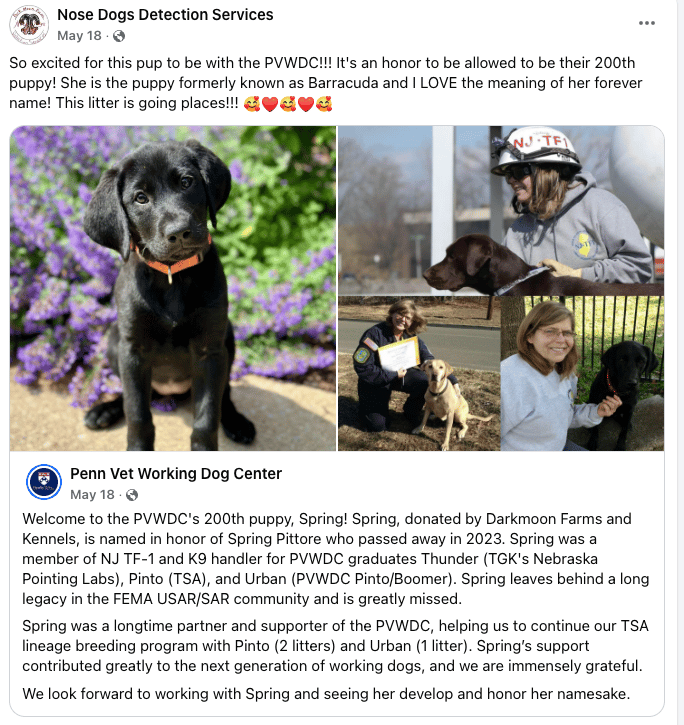
Spring was the 200th puppy accepted into the PVWDC program.
That alone is enough to make a breeder proud. But the name she now carries makes it even more meaningful. Spring was named in honor of Spring Pittore, a beloved K9 handler and longtime PVWDC partner who worked with multiple detection dogs and helped advance the TSA lineage breeding program. Her legacy shaped the future of working dogs, and I’m honored that one of mine gets to carry her name.
Meet Preti: A Legacy of Scent Science
And now, I’m thrilled to share that another puppy from the program, Preti, formerly Gremory from the Solomon litter, has joined the PVWDC family.
Named in honor of Dr. George Preti, a pioneering chemist at the Monell Center, this pup represents something special. Dr. Preti spent his life studying human odor and played a key role in early research into scent detection. He brought together scientists, clinicians, and working dog experts because he believed in the power of odor, and in dogs, to advance what’s possible.

Preti, named in honor of Dr. George Preti
To have one puppy selected for PVWDC is a huge honor. To have two, both carrying the names of people who helped shape the future of scent detection, is honestly beyond words. I’ve followed PVWDC for a long time. Being part of their work in any capacity is an honor. But to contribute dogs to their program? That’s a professional dream realized.
A Rigorous Selection Process
But here’s something most people don’t see: just how rigorous the selection process is. It’s not enough to want to donate a puppy. In fact, only a very small percentage of breeders or litters ever qualify.
The process starts with a breeder application that requires extensive health certifications and genetic testing. If approved, a specific litter is submitted for consideration, complete with video footage of each puppy, followed by a lengthy Zoom review and discussion with the PVWDC selection committee.
They’re looking for more than just good dogs. They’re looking for the best puppies with excellent structure, high drives, stable temperaments, and the potential to become elite working dogs. Proven workability in the pedigree is essential; they need to see that the breeding program consistently produces dogs that succeed in real working roles.
For me, having two puppies accepted validates everything I’ve worked toward in my breeding and training program.
I recently visited the center in person, and watching them evaluate puppies was remarkable.
More Than Training
And yes, research is a huge part of what they do. PVWDC doesn’t just train elite detection dogs, they conduct groundbreaking studies that benefit working dogs around the world.

One of the projects I learned about during my visit was focused on identifying the fastest and most effective way to cool down a working dog in the field. That kind of research is game-changing, not just for my dogs, but for the safety and longevity of working dogs everywhere.
Support That Makes a Difference
This kind of work is critical, but it’s also often underfunded. There’s currently a 3–4 year waitlist for dogs from PVWDC. The demand is there. The expertise is there. What’s missing is consistent, long-term support to meet the need.
If you care about advancing the science and safety of working dogs, I encourage you to learn more about the Penn Vet Working Dog Center. Their impact extends far beyond a single dog or deployment. It affects public safety, scientific discovery, and the entire future of detection work.
Anything I can do to move that mission forward, I will. If you're in a position to help, whether through donating, sharing their story, or simply learning more, I’m proud of these pups. I’m proud of this program. And I can’t wait to see what Spring and Preti accomplish next.